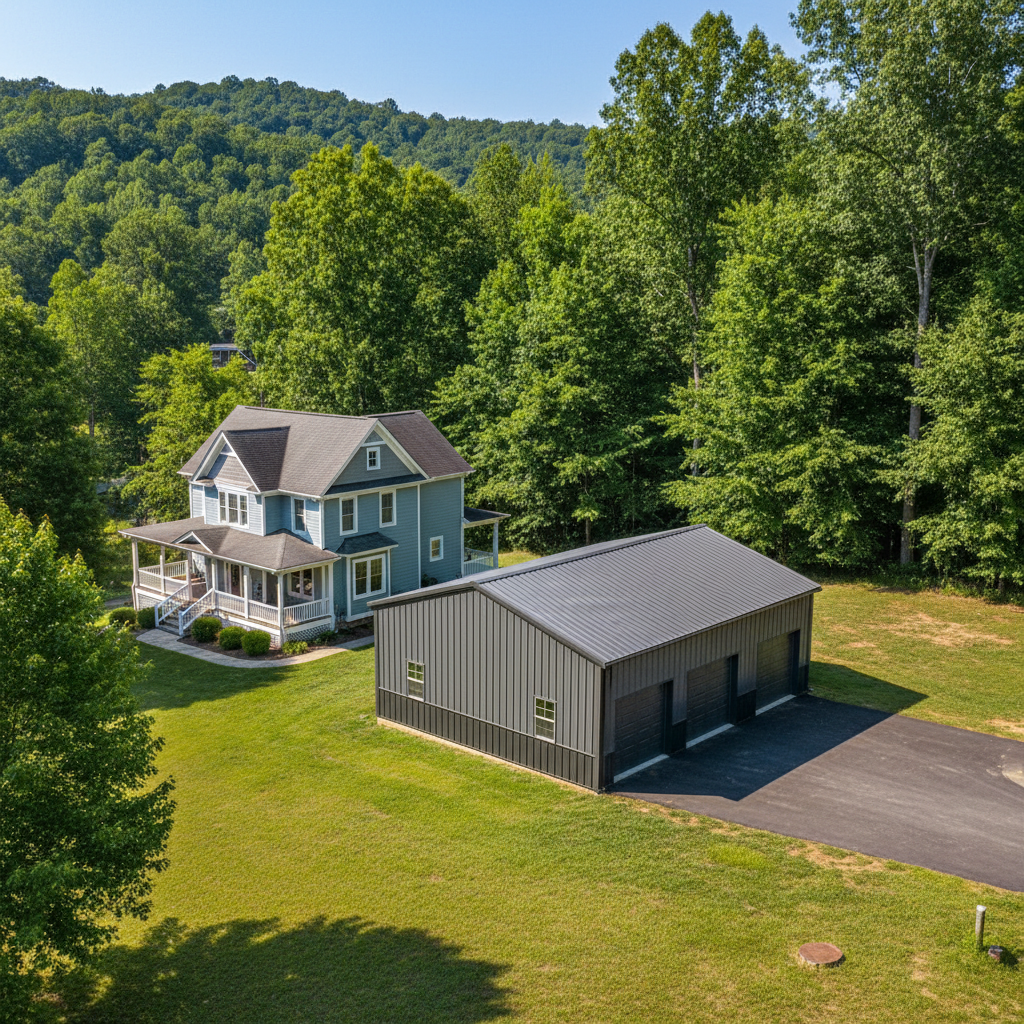
So, you've decided on a metal building for your property right here in Asheville. Maybe it's a workshop, or a new garage for your classic car, or even a small commercial space. That's a smart move; these buildings are tough, really built to last. But before you even think about the frame going up, we need to talk about what it's sitting on: the foundation.
Why Asheville Foundations Aren't One-Size-Fits-All
Around here, 'flat ground' is more of a suggestion, frankly, than a reality. We're definitely not talking about the plains of Kansas. From Candler's rolling hills to the steeper grades you find in Montford, every site throws up its own challenges. You've got to think about the soil, the slope, and even how water drains, especially with our heavy summer rains. I've seen folks try to cut corners, and it always, always, comes back to bite them. A bad foundation means a crooked building, doors that won't close right, and a whole lot of headaches down the line.
The soil itself can be tricky, too. We often deal with a good bit of clay, which can expand and contract a lot with moisture. If you're building on a slope, you might need a stepped foundation or even a retaining wall to keep things stable. It's not just about pouring concrete; it's about really understanding the land you're building on. That's where local knowledge truly pays off. Someone who's been working in these mountains for years knows exactly what to look for.
Common Foundation Types for Metal Buildings
For most metal buildings, you're usually looking at a few main foundation types. Each has its good points and bad points, and the best choice really depends on your specific project and the conditions of your site.
- Concrete Slab: This is probably the most common one. It's a flat, thick piece of concrete poured directly on the ground. It gives you a solid floor and a stable base for the building. For a garage or workshop, it's often the first choice. You'll need proper grading and a good vapor barrier underneath to keep moisture problems away.
- Perimeter Foundation (Footings): Sometimes, you might just need a concrete perimeter footing with a gravel or dirt floor inside. This works well for storage buildings where you don't need a finished floor, or if you plan to pour a slab later. It saves a bit on the initial concrete costs.
- Pier Foundations: For really uneven ground, or if you're trying to dig as little as possible, piers can be an option. These are concrete columns that go down to stable soil, with the building frame then attached to a beam system on top of the piers. It's more complex, sure, but sometimes it's the only way to build on certain sites.
We'll always check out your specific site to suggest the right approach. There's no point in over-engineering if you don't need it, but you definitely don't want to under-engineer either.
Why Local Expertise Matters for Your Foundation
You can buy a metal building kit from anywhere, but getting it installed right, starting with the foundation, is where a local crew makes all the difference. We know what the building inspectors in Buncombe County are looking for. We understand the local building codes, which can be surprisingly specific about things like the frost depth for footings. You don't want your foundation cracking because it wasn't dug deep enough to get below the frost line during a cold Asheville winter.
When Alpha Metal Buildings handles your project, we're not just putting up a structure; we're building something that will stand strong on *your* land, in *our* weather, for decades. We've poured hundreds of foundations right here in the Asheville area, from Weaverville to South Asheville, and we've seen it all. We know how to deal with rock, how to manage water, and how to get a level pad even when nature didn't provide one. Don't trust something this critical to an out-of-town crew who doesn't understand our unique environment.
Getting the foundation right is the first, and arguably most important, step in your metal building project. It sets the stage for everything else. Take the time, do it right, and you'll have a building that serves you well for a lifetime.